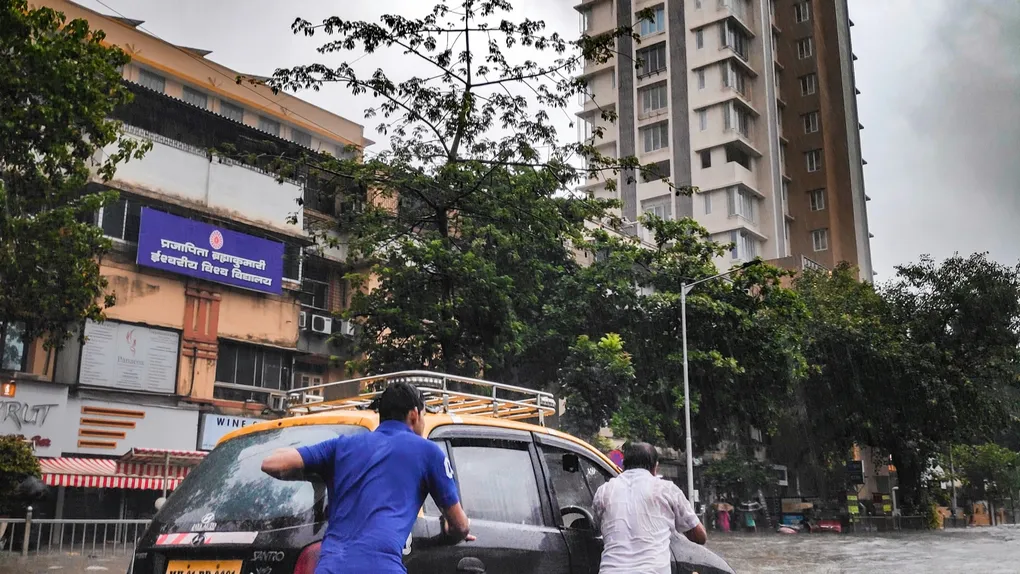
Prepping for a flood (Part 4): The go signal
Human nature is to “wait and see.” We look out the window, see the rain, and think, “It’s not that bad yet.” This is the most dangerous instinct you possess during a flood. Every flood survivor story has a version of the same moment. The rain gets serious, the group chat fills with screenshots, and somebody says “let’s wait and see how bad it gets.” In the floods I have read about closely, that sentence divides the town into two groups: the people who left while the roads were still black asphalt, and the people who spent the night on a roof waiting for a boat. The difference between the groups was almost never information. It was that the first group had decided in advance what their breaking point looked like.
Human nature is to wait and see. It is the most dangerous instinct you possess during a flood, because roads flood before homes do. By the time water is lapping at your doorstep, the escape routes are likely already impassable. If you wait until the danger is obvious, you are already trapped. A go signal is a pre-decided trigger. It removes emotion from the equation. When the trigger is pulled, you do not debate, you execute.
This is Part 4 of the flood series, and it is about that decision: when to move, what to take, and how to route a car through a landscape that is quietly turning into a river.
Disclaimer: The information provided in this article is for general informational and educational purposes only. It is not intended as, and should not be considered, professional or emergency-response advice. Always follow the instructions of local authorities during an active flood event.
The Readiness Audit
If a flood warning was issued right now, how long would it take you to leave?
- Green: Your car has a full tank of gas, your go-bags are by the door, and you have a printed map of high-ground routes.
- Yellow: You have a bag, but you plan to check social media and the news to see if it “really gets bad.”
- Red: Your gas tank is empty, and you do not know where you would go.
If you are Yellow or Red, execute Phase 1 immediately.
Phase 1: The Triggers (When to Move)
Goal: Define the exact moment you leave, so you do not have to think about it under stress.
The Official Watch vs. Warning
- Flood Watch: Conditions are favorable for flooding. Action: Pack the car. Fuel up. Monitor.
- Flood Warning: Flooding is imminent or occurring. Action: If you are in a flood zone, go. Do not finish dinner. Do not shower. Leave.
The Personal Trigger
Do not rely solely on the government. They may be overwhelmed. Set your own line in the sand.
- Example: “If the creek at the end of the street breaches its banks, we leave.”
- Example: “If the rainfall rate exceeds 2 inches per hour, we evacuate.”
The Pre-Evacuation (Beat the Traffic)
- The Strategy: If you have children, elderly family, or large pets or livestock, you cannot evacuate quickly. You must leave on the watch, not the warning.
The Takeaway: The trigger decides before your emotions get a vote. Write yours down, tell the family, and treat it like a fire alarm.
Phase 2: The 5 Ps of Evacuation (What to Take)
Goal: Rapid packing without forgetting the essentials.
When the adrenaline hits, you will forget your own phone number. Use the 5 Ps mnemonic:
- P, People and Pets: Account for everyone. Leashes on pets immediately.
- P, Prescriptions: Meds, glasses, and hearing aids. You cannot buy these easily on the road.
- P, Papers: Your document pouch (insurance, deeds, IDs) from Part 2.
- P, Personal Needs: Phones, chargers, and a change of clothes.
- P, Priceless Items: Photos, heirlooms, or hard drives. Only if time permits.
The Takeaway: Five categories, one pouch, one bag per person. If you are inventing the list during the warning, you are already late.
Phase 3: The Route (Navigation Strategy)
Goal: Avoid the water trap.
The High Ground Map
- The Problem: Your normal route to work or school likely takes the path of least resistance, which is often low-lying.
- The Fix: Map a route based on elevation, not speed. Avoid underpasses, dips in the road, and bridges over small creeks.
The Turn Around Physics
- The Stat: It takes only 12 inches of moving water to float a small car. It takes 2 feet to sweep away a truck.
- The Invisible Trap: You cannot see if the road under the water is still there. The asphalt may have washed away, leaving a sinkhole.
- The Rule: If you see water crossing the road, turn around, do not drown. Never guess the depth.
The GPS Trap
- Warning: Navigation apps prioritize speed. They may route you onto a shortcut backroad that is currently underwater.
- Action: Trust your eyes and local signage over your app.
The Takeaway: The shortest route and the safest route are different roads during a flood. Drive the one you walked through in your head before the rain.
Phase 4: Pet and Livestock Protocol
Goal: No one gets left behind.
- Small Pets: If you evacuate, they go with you. Have carriers ready.
- Large Animals: If you cannot move horses or livestock, do not lock them in a barn. A barn is a trap. Turn them out into the highest pasture available. They have better instincts than you do and can swim if not trapped in a stall.
- The Last Resort: If you are rescued by boat or helicopter and they refuse your pet (common), leave the pet loose in an upstairs room with dry food and water, and an open window. Never tether or crate an animal in a flood zone.
The Takeaway: Animals cannot read your go signal. Their plan is your plan, written down in advance.
The Essential Kit Checklist
- The Full Tank: Keep your car gas tank above half-full during rainy seasons (pumps do not work without electricity).
- The Cash: ATMs will be down. Keep $200 in small bills in your go-bag.
- The Analog Map: A physical road map with your high-ground route highlighted.
- The Window Breaker: A glass-breaking tool kept in the center console of your car (in case you drive into deep water).
Scenario Planner (Contingencies)
“I waited too long, and the street is flooded. I’m trapped.” The trap: attempting to drive through deep water to escape. The fix: vertical evacuation. Do not drive. Retreat to the highest level of your home. Caution: do not climb into a closed attic unless you have an axe or saw. If the water keeps rising, you will drown against the roof. Go to the roof itself if necessary.
“We got separated in the chaos.” The trap: cell towers are overloaded or down. The fix: the out-of-area contact. Designate one family member who lives in a different state as your check-in point. Everyone calls or texts them to report safety.
Next Steps
- Write your go signal tonight. One sentence, taped inside a kitchen cabinet: “If [specific local trigger], we leave for [specific place].”
- Top off the tank and build the pouch. Half a tank from today forward, and one document pouch per Part 2’s list.
- Read Part 5: Breach response next, for the hours when the go signal never came and the water comes to you instead.
Originally adapted from public FEMA and National Weather Service flood safety guidance (public domain).