Prepping for a hurricane (Part 6): Surviving the storm
There is a sound hurricane survivors describe the same way: a train that never passes. The family that lived through the eyewall of a major storm in their interior hallway said the scariest part was not the noise. It was the moment they heard a pressure pop, a window failing somewhere in the dark, and had to decide in two seconds whether to fix it or forget it. They chose to forget it, closed an interior door behind them, and that decision is why they are here.
This is Part 6 of the hurricane series, the part about the hours inside the storm. Everything before this was preparation. Everything after this is recovery. The hours in between are governed by a handful of protocols, and they are not intuitive, which is exactly why they have to be learned in advance. The eye of a hurricane is the deadliest trap in the storm.
Disclaimer: The information provided in this article is for general informational and educational purposes only. It is not intended as, and should not be considered, professional or emergency-response advice.
The Readiness Audit
Do you know what to do in the middle of the night when the wind screams?
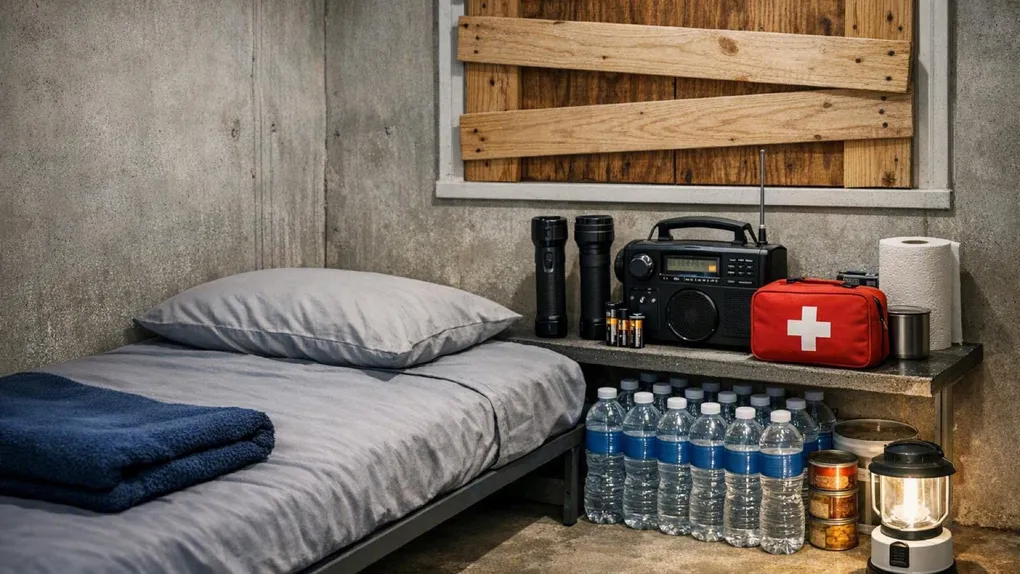
- Green: You have a safe room staged with a mattress, helmets, and a NOAA weather radio.
- Yellow: You plan to hide in a hallway, but you might open the front door to check the storm.
- Red: You plan to crack the windows to equalize the pressure.
If you are Yellow or Red, read Phase 2 immediately.
Phase 1: The Countdown to Lockdown (Tropical Storm Force)
Goal: Get inside and seal up before the wind becomes lethal.
When the outer bands arrive, the clock is running. The wind builds in stages.
- 39 to 73 mph: tropical-storm-force winds begin. This is the final warning. Outdoor work is over. Get inside and lock down.
- The door protocol: brace and bolt your doors. Do not go outside again for any reason.
- The pressure myth: do not crack the windows to equalize pressure. This is a dangerous myth. It actually lets wind enter, pressurize the house, and blow the roof off. Keep the envelope sealed.
The Takeaway: Thirty-nine miles per hour is the door-slamming threshold. Everything you do outside ends here, and the envelope stays sealed.
Phase 2: The Peak Protocol (74 mph Plus)
Goal: Survive the eyewall in the safe room.
At hurricane force (74 mph plus), wind turns debris into shrapnel. Retreat to the safe room.
- Shoes on: put on sturdy shoes and keep them on. Glass and nails will be everywhere if the house is breached.
- Helmets for kids: a bike helmet or batting helmet can prevent a fatal head injury from falling debris.
- The mattress shield: hold a mattress in front of you as a shield against flying glass and falling ceiling. This is your armor.
The Breach Protocol
If a window blows out or a door fails:
- Do not fix it: do not attempt to tape it or board it during the storm.
- Isolate: close the interior door to the affected room to seal the rest of the house from the pressurized wind.
- Towel: place a towel under the door to slow the water and debris flow.
The Takeaway: The eyewall is survived horizontally: low, shielded, and away from the failure. Fixing anything inside a storm is how people get hurt.
Phase 3: Light Discipline (No Candles)
Goal: Light your world without burning it down.
- The rule: do not use candles. Downed gas lines and fuel spills make every hurricane house a potential fire trap.
- The tech: use battery-powered lanterns and flashlights. If you use candles as a last resort, never leave them unattended, but honestly, just do not use candles.
The Takeaway: Fire is the second storm. Batteries only, and the flame never comes out.
Phase 4: The Eye Is a Trap
Goal: Do not be fooled by the calm.
- The scenario: the wind suddenly stops. The sun may even come out. Birds appear. It looks over.
- The reality: you are in the eye. The sky is clear but the wind will resume from the opposite direction with the same or greater violence. The backside of the eyewall is coming.
- The protocol: stay inside. Use the calm to check on family and move to the strongest room, but do not go outside.
- The exception: the exception for the eye is minutes, not hours. If the calm lasts for hours (this is the rare exception for massive eyes), do not trust it, as the backside is always coming.
The Takeaway: The calm is the halfway point, not the finish line. The backside is coming from the opposite direction with the same energy.
Phase 5: The Hidden Threats (Tornadoes and Breach)
Goal: Manage the secondary killers.
The Tornado Threat
- The fact: tornadoes spin up in the front-right quadrant of the hurricane, often dozens of miles ahead of the center.
- The tool: a NOAA weather radio (battery powered). It is the only way to hear tornado warnings if the power is out.
The Water Problem
- The scenario: water is seeping in under doors or the roof is cracking.
- The protocol: if the roof cracks, move to the bathroom or the bathtub, with a mattress over you. This is the last stand.
- The priority: if water is seeping in, save the towels for people, not floors. Get them to the family first, mop with what is left.
The Takeaway: The storm kills in more ways than wind: tornadoes ahead of the eye, water under the door, and a roof you may have to evacuate from within the house itself.
The Essential Kit Checklist
- The radio: battery-powered NOAA weather radio.
- The light: flashlights or headlamps (not candles).
- The shield: a mattress moved into the safe room.
- The protection: bike or batting helmets for every family member.
- The boots: sturdy shoes in the safe room.
Scenario Planner (Contingencies)
“The front door blew open during the storm.” The trap: going out into the wind to close it. The fix: the interior door. Let it blow. A broken front door is a repair, not an emergency. Seal the hallway. The wind is temporary: your spine is not.
“Water is rising in the street outside.” The trap: thinking you can watch and decide later. The fix: vertical rescue logic. Water does not care about wind. If water enters the structure, move people and go-bags to the highest floor immediately (if the house is two stories or more). Do not wait for the water to reach the door.
Next Steps
- Stage the safe room tonight. Mattress, helmets, NOAA radio, and boots all go in the windowless interior room, so the protocols are zero-decision when the wind arrives.
- Delete the pressure myth from every head in the house. Sealed envelope, always. Tell your family the windows stay closed and why.
- Read Part 7: The aftermath next, because surviving the storm is the halfway point: the quiet hours after the wind carry their own killers.
Originally adapted from public FEMA and National Hurricane Center guidance (public domain).