Prepping for a solar flare: Protect the grid, not the gadget
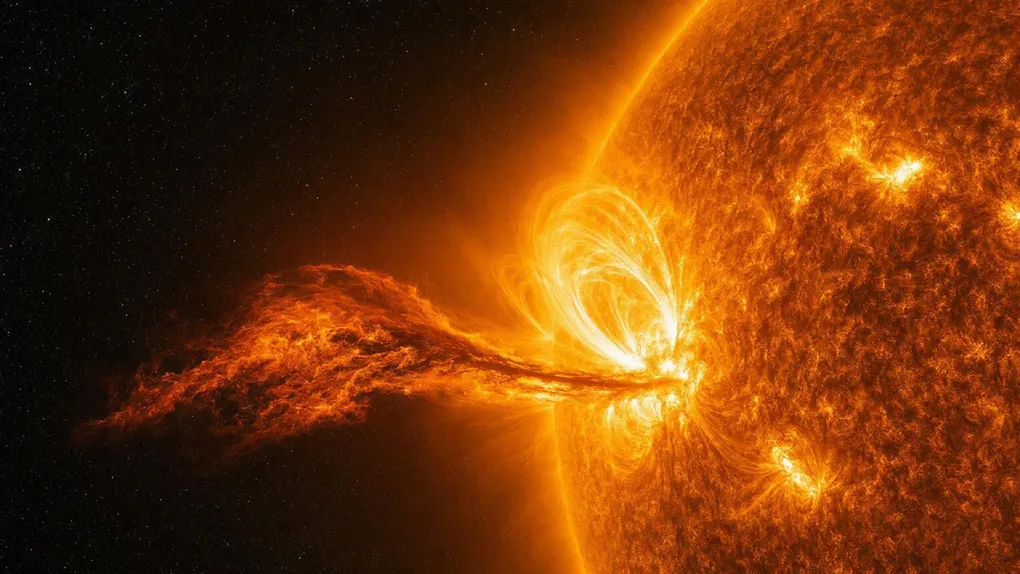
A Coronal Mass Ejection (CME) is essentially a “solar sneeze”, a massive burst of plasma and magnetic field ejected from the sun. When a large one hits Earth (like the 1859 Carrington Event), it doesn’t just make pretty auroras, it induces massive electrical currents in our power lines, potentially melting the giant transformers that act as the backbone of the grid.
This isn’t science fiction, it’s happened before, and NASA predicts a 12% chance per decade of it happening again. But here is the good news that “doom-tubers” won’t tell you: a CME is not a nuclear EMP. It won’t necessarily fry your car or your unplugged phone. It is primarily an infrastructure killer. This guide strips away the Hollywood myths and focuses on the engineering reality. You will learn the difference between a G1 and a G5 storm, how to protect your electronics for pennies, and how to pivot your family to an “analog” lifestyle when the digital world goes dark for weeks or months.
Disclaimer: The information provided in this article is for general informational and educational purposes only. It is not intended as, and should not be considered, legal, medical, or engineering advice. Space weather is unpredictable. Always follow alerts from NOAA’s Space Weather Prediction Center and local emergency management.
The five pillars of solar defense
1. It’s about the grid, not the gadget. Unlike a nuclear EMP (which fries microchips), a CME primarily affects long conductors like power lines and pipelines. Your unplugged laptop will likely survive, the power plant supplying it will not.
2. The transformers are the choke point. Large high-voltage transformers are custom-built and take 12 to 18 months to manufacture. If a Carrington event melts hundreds of them simultaneously, we are looking at a blackout measured in months, not days.
3. GPS will fail first. Satellites are the first casualty. GPS, banking timestamps, and satellite communications will likely go offline immediately. You need paper maps and cash.
4. The “unplug” protocol. When a solar storm warning is issued (we usually get 12 to 48 hours notice), simply unplugging your appliances from the wall is your best defense against the incoming power surge.
5. Community is the ultimate backup. In a long-term grid-down scenario, you cannot survive as a “lone wolf.” Your neighbors become your lifeline. Skills (gardening, medical, repair) become the new currency.
Part 1: The Carrington Event
The fear of solar weather comes from the unknown, so Part 1 removes it. You will learn the anatomy of a solar sneeze: the flare (radiation that arrives at the speed of light, 8 minutes out, scrambling radio and GPS) versus the CME (a billion tons of plasma traveling 15 to 72 hours, which does the real damage). The 1859 Carrington Event shows what happens when it lands: auroras so bright that gold miners in the Rockies made breakfast at 1 AM, and telegraph operators who unplugged their batteries and kept sending messages because the atmosphere itself was charged. The mechanism is induction, current building up in long conductors, which is why your 4-inch phone wire is safe and the grid’s thousands of miles of copper is not. The bottleneck is the transformer: custom-built, 400 tons, 12 to 18 months to replace, and if 300 of them fail at once, the lights stay off for years.
Read the full guide on The Carrington Event
Part 2: The myth of the fried car
The movie scene where every car dies at once is terrible physics, and believing it costs preparedness dollars. Part 2 separates the two beasts: an E1 pulse (nuclear EMP, nanosecond-fast, fries microchips) versus an E3 pulse (solar CME, low-frequency, needs hundreds of miles of conductor, and your car is barely 15 feet long). Even the EMP Commission’s own testing of about 50 cars found most kept running and stalled ones restarted. The real vehicle threat is logistics: gas pumps run on electricity, so the half-tank rule is your reserve, and GPS will scramble, so the paper map in your glovebox is your navigation. Spare fuses and a Faraday bag for your phone complete the kit.
Read the full guide on The Myth of the Fried Car