Prepping for Being a Victim of Crime (Part 2): Immediate Response
The homeowner who interrupted the burglary in progress at his own house did everything wrong in the space of ninety seconds, and the detective explained it gently afterward. He had charged in through the front door the burglars had just left, stepped on the glass they had broken, and wiped his hands on the doorknob they had touched. Nothing he did made him less safe in that moment, but everything he did destroyed the evidence his case would need. The adrenaline had told him to fix the problem. The protocol would have told him to freeze the problem.
The first 60 minutes after a crime, “The Golden Hour”, are defined by chaos. Your body dumps a massive amount of adrenaline into your bloodstream, and how you respond in those first critical moments can significantly impact the outcome, for your safety, for the investigation, and for your recovery.
Caution: Instincts can be wrong. The natural urge is to “clean up the mess” or run into your home to see what was stolen. These actions can destroy critical forensic evidence or put you back in the line of fire. By following a strict “Safety & Preservation” protocol, you survive the physical event and preserve the legal chain of evidence needed to get justice later. This is Part 2 of the crime-victim series.
Disclaimer: The information provided in this article is for general informational and educational purposes only. It is not intended as, and should not be considered, legal or medical advice. In any emergency, call 911 first.
The Readiness Audit
Do you know your first three moves?
- Green: You know your body’s stress response, have a safe room, and know not to disturb a scene.
- Yellow: You would call 911 but would also start cleaning up.
- Red: You have never thought about what you would actually do.
If you are Yellow or Red, memorize Phase 1 now.
Phase 1: The Stress Response (Understanding Your Body’s Reactions)
Goal: Manage the machine you are running on.
When confronted with a crime, your body initiates a “fight, flight, or freeze” response.
Physical changes: rapid heartbeat and breathing, tunnel vision and auditory exclusion, fine motor skill deterioration, time distortion (events may seem to slow down or speed up), and an adrenaline surge that can mask pain.
Mental effects: difficulty with complex thinking, memory formation may be affected, emotional intensity or detachment, and automatic responses may override conscious decisions.
Managing the response: use tactical breathing (inhale 4 counts, hold 4 counts, exhale 4 counts), focus on one thing at a time, use pre-planned responses when possible (they require less cognitive load), and accept that some impairment is normal, don’t beat yourself up for not reacting “perfectly.”
The Takeaway: Your body will run its program without asking you, so the plan you rehearsed is the plan that runs, and breathing in fours is the reset button.
Phase 2: Scenario-Specific Responses
Goal: Match the response to the crime.
Property theft (vehicle break-in, package theft, burglary when not home)
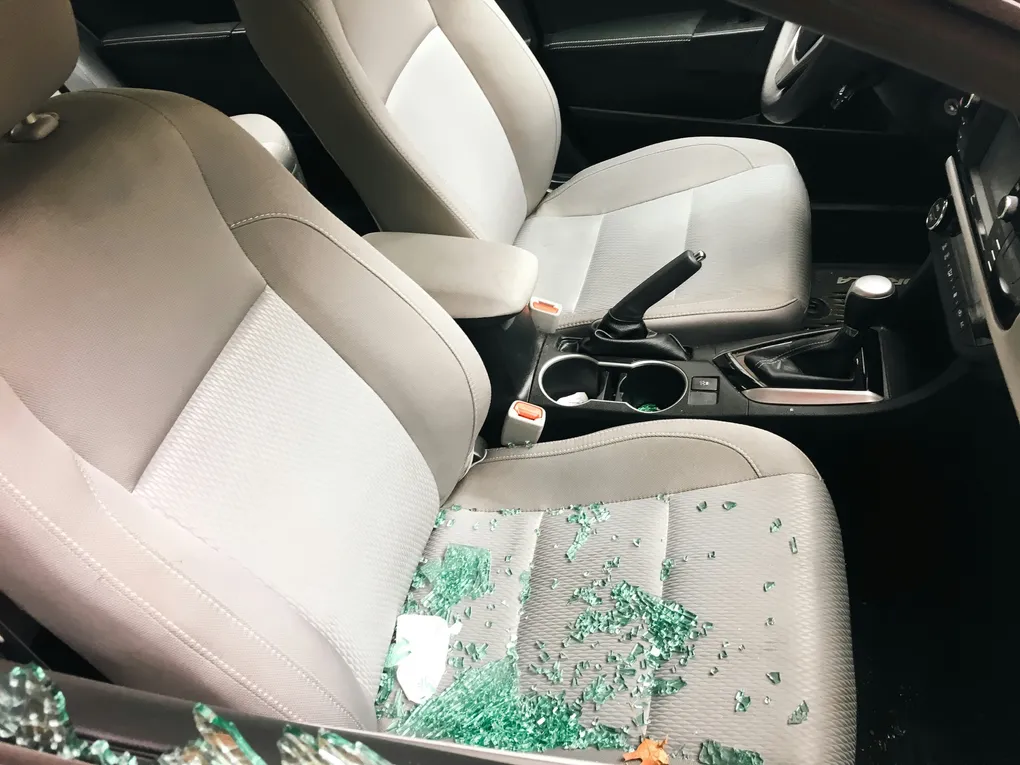
Do: document everything before touching anything, call the police non-emergency line to file a report, check if neighbors have security cameras that might have captured the incident, contact your insurance company, and cancel or monitor any cards/accounts if financial information was stolen.
Don’t: chase after suspected thieves, touch or clean up the scene before documenting, or assume police won’t care, you need the report for insurance and statistics matter for resource allocation.
Confrontational theft (mugging, carjacking)
Your primary goal is survival. Property can be replaced, you cannot.
Do: comply with demands for property if confronted with a weapon, keep hands visible and make slow, predictable movements, try to remember details about the attacker (height, clothing, distinguishing features, direction of travel), and as soon as it’s safe, call 911 and get to a secure location.
Don’t: resist over replaceable items, chase the attacker, try to be a hero unless lives depend on it, or make sudden movements that could be perceived as threatening.
Assault
If escape is impossible and you must defend yourself:
Do: create distance if possible, use anything available as a barrier (chairs, bags, shopping carts), if you must fight, commit fully and target vulnerable areas (eyes, throat, groin), continue until you can escape, then escape, call 911 immediately after reaching safety, and seek medical attention even for seemingly minor injuries.
Don’t: escalate a verbal confrontation to physical if you can de-escalate or leave, worry about “fighting fair”, this isn’t a competition, or assume it’s over until you’re safely away.
Home invasion (while you’re home)
If you can escape safely: leave immediately with family members, don’t try to gather belongings, call 911 once outside, and go to a neighbor’s house or safe distance.
If you cannot escape: get to your safe room (ideally master bedroom with reinforced door), call 911 and stay on the line, arm yourself with whatever is available, make noise (most home invaders don’t want confrontation and will flee), and know that if the door is breached, you’ve now established a clear intruder scenario.
Sexual assault
Do: trust your instincts about whether resistance will help or hurt, look for any opportunity to escape, if you choose to resist, be explosive and total, then run, go to a safe place immediately after, don’t shower, change clothes, or clean up before a medical exam, seek medical care and consider a SAFE (Sexual Assault Forensic Exam), and know that you can have the exam without deciding immediately whether to report to police.
Don’t: blame yourself, whatever you did or didn’t do, you survived, or let anyone tell you how you “should” have responded.
The Takeaway: Every scenario has its own non-negotiable: property crimes preserve evidence, confrontations preserve your life, and home invasions end at the reinforced door, not the front porch.
Phase 3: The Critical First Hour
Goal: Safety, then documentation, then notifications.
Immediate safety: are you in immediate danger? If yes, relocate to safety first. Do you need emergency medical care? If yes, call 911. Once safe, contact police (911 for emergencies, non-emergency line for property crimes where there’s no immediate threat).
Documentation, while memories are fresh: what happened (sequence of events), physical descriptions of perpetrators, vehicle descriptions (make, model, color, license plate if possible), direction of travel, any weapons observed, and witnesses with their contact information.
Evidence preservation: don’t clean up the crime scene, don’t touch or move items the criminal touched, take photos/video before anything is disturbed, save any text messages, emails, or digital evidence, and don’t wash clothes worn during the incident.
Notifications: police (if not already notified), emergency contacts/family members, insurance company (for property crimes), banks/credit cards if financial information may be compromised, and your employer if you’ll miss work or the crime occurred at work.
The Takeaway: Safety, memory, scene, phones: in that order, because the account you write at hour one is the account the whole system will run on.
Phase 4: Dealing with Law Enforcement
Goal: Be the witness investigators need.
When police arrive: put away anything that could be mistaken for a weapon, keep hands visible, follow their instructions, and be patient, they need to ensure the scene is safe first.
Giving your statement: stick to the facts of what you witnessed, it’s okay to say “I don’t know” or “I’m not sure,” don’t guess or fill in gaps with assumptions, ask for the case number and investigating officer’s contact information, and you can request a victim’s advocate if available.
Your rights: you have the right to be treated with dignity and respect, you can have a support person present in many jurisdictions, you can request a female officer for sensitive crimes (request will be accommodated if possible), and you can ask about victim services and compensation programs.
The Takeaway: “I am not sure” is a complete and honorable sentence, and the case number is the key that unlocks insurance, victim funds, and everything after.
Phase 5: Children as Victims or Witnesses
Goal: Protect the smallest witnesses.
- Ensure their immediate safety, use age-appropriate, calm language, don’t pressure them to talk but be available to listen, consider professional support from the start, maintain routines as much as possible for stability, and reassure them it’s not their fault and they’re safe now.
The Takeaway: Routines are the medicine for shaken children, and “it’s not your fault, and you are safe now” is the sentence they need to hear more than once.
The Essential Kit Checklist
- The plan: rehearsed first moves for the scenarios your life actually contains (home, car, public).
- The safe room: reinforced master-bedroom door, phone, flashlight, and water staged inside.
- The documentation habit: case number, officer name and badge number, written narrative within the hour.
- The notification list: police, family, insurance, banks, employer, in that order of urgency.
Scenario Planner (Contingencies)
“I came home and the door is open.” The trap: entering to check what is missing. The fix: the threshold rule, do not go in. The burglar may still be inside, and the scene inside is evidence. Back out, call 911 from the sidewalk, and let the first boots inside belong to the police.
“I froze during the incident and feel ashamed.” The trap: judging your brain’s automatic response. The fix: the physiology lesson, freezing is a documented stress response, not a moral failure, and survivors who complied, fled, or froze all survived the same event. Report what actually happened, not what you wish you had done.
Next Steps
- Write your first-three-moves card tonight for the two scenarios most likely in your life, and put it where you will find it in a bad moment.
- Walk the safe-room drill with the family: who grabs the phone, where the flashlight lives, what “make noise” means in practice.
- Read Part 3: Securing evidence and working with authorities next, for the 24-to-48-hour window when evidence is won or lost and the justice system starts moving.
Originally adapted from public DOJ and victim-response guidance (public domain).