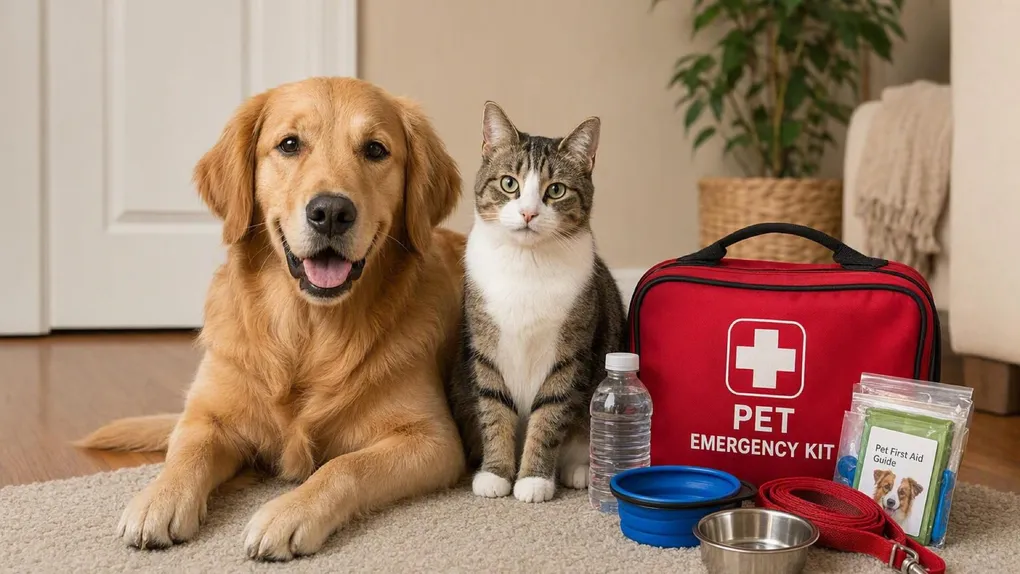
Prepping your family and household (Part 5): Prepare your pets
The dog was the reason the family went back into the evacuation zone, and the dog was the thing they lost. They had forty minutes, a minivan, and a shelter list that had never been checked for pets. The public shelter’s rule was printed on the door in the kind of plain language nobody reads until they are standing in front of it. Most public shelters and hotels do not allow pets. By law, only service animals must be admitted. The dog spent the storm in a stranger’s garage two counties away because a neighbor-of-a-neighbor said yes, and the family now keeps a laminated pet card in the van glovebox.
Your pets are family, and they depend on you completely. In an emergency, they cannot plan for themselves. The single most heartbreaking outcome of a disaster is a pet left behind because no one planned for it.
Caution: The “We’ll figure it out” gamble. Most public shelters and hotels do not allow pets. Without a plan, you may be forced to leave your pet behind during an evacuation, and pets left behind rarely survive. A pet kit and a pet-friendly destination are non-negotiable.
Disclaimer: The information provided in this article is for general informational and educational purposes only. It is not intended as, and should not be considered, professional or veterinary advice. Always follow the instructions of local authorities.
The Readiness Audit
Are your pets part of your emergency plan?
- Green: You have a pet kit, a pet-friendly destination, and a buddy system in place.
- Yellow: You have pet food at home but no evacuation plan for your pets.
- Red: You have never thought about what would happen to your pets in a disaster.
If you are Yellow or Red, execute Phase 1 immediately.
Phase 1: Make a Plan
Goal: Decide what happens to your pets during an emergency.
- Evacuation destination: know a safe place to take your pets, since most shelters and hotels do not allow them.
- Buddy system: arrange with neighbors, friends, or relatives to care for or evacuate your pets if you cannot.
- Identification: keep vaccination records, make sure your pet is microchipped, and keep your contact information up to date.
The Takeaway: A plan is what keeps your pet from being left behind.
Phase 2: Build a Pet Kit
Goal: Assemble the supplies your pet needs to survive.
- Food and water: several days of supply, in an airtight, waterproof container, with a water bowl.
- Medicine: an extra supply of your pet’s regular medicine in a waterproof container.
- First aid kit: items appropriate for your pet’s emergency medical needs.
- Collar and leash: a backup collar with an ID tag and a harness or leash.
- Carrier: a traveling bag, crate, or sturdy carrier for each pet.
- Sanitation: pet litter, a litter box, and trash bags.
- Comfort: favorite toys, treats, or bedding to reduce stress.
- Photo: a picture of you and your pet together to document ownership.
The Takeaway: A pet kit is your pet’s survival kit. Build it before you need it.
Phase 3: Stay Informed
Goal: Know how you will receive alerts and warnings.
- Alerts: download the FEMA app to get weather alerts for your locations.
- The rule: bring your pets indoors at the first sign or warning of a storm.
- The reason: pets are vulnerable to the same hazards you are, and they cannot seek shelter on their own.
The Takeaway: Stay informed so you can act before the danger arrives.
The Essential Kit Checklist
- Destination: identify a pet-friendly place to evacuate to.
- Buddy system: arrange for someone to care for your pets if you cannot.
- Microchip: make sure your pet is microchipped with current contact info.
- Food and water: store several days of supply.
- Medicine: keep an extra supply in a waterproof container.
- Carrier: have a crate or carrier for each pet.
- Photo: keep a picture of you and your pet together.
Scenario Planner (Contingencies)
“My pet is small, I can just carry it.” The trap: underestimating the logistics. The fix: even small pets need food, water, and a carrier. A pet kit covers the supplies, not just the animal.
“The shelter will make an exception for my pet.” The trap: assuming rules will bend. The fix: by law, only service animals must be allowed in public shelters. Plan a pet-friendly alternative in advance.
Next Steps
- Call the two closest hotels and the county emergency office this week and ask the pet question directly, then write the answers on the pet card.
- Microchip check: log into the registry and confirm your phone number is current, because a chip with an old number is a door with the wrong address painted on it.
- Read the Family and household checklist next, to consolidate this entire series into a printable script.
Originally adapted from public FEMA pet-preparedness guidance (public domain).