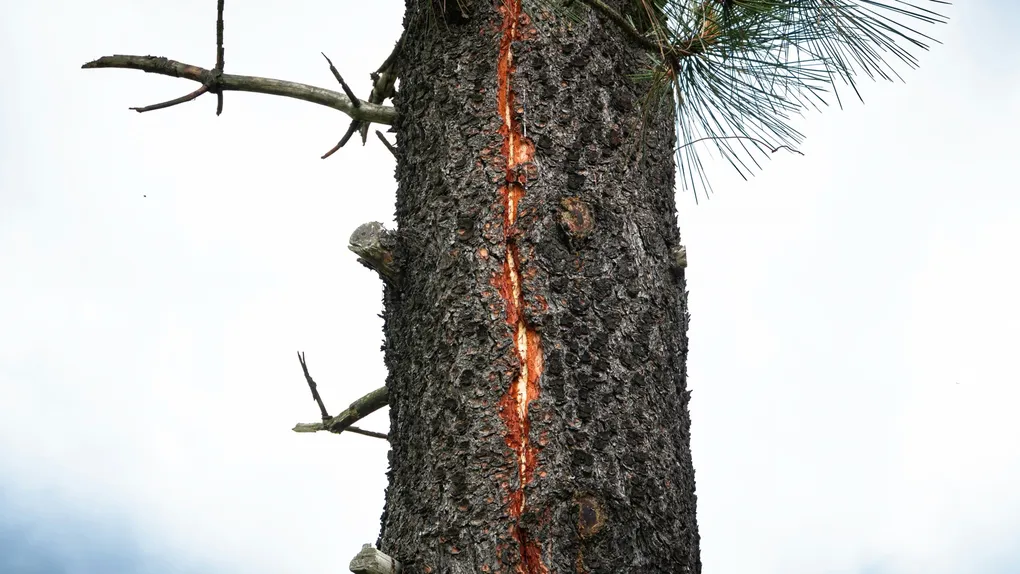
Prepping for lightning (Part 2): How lightning strikes people
Every lightning safety rule makes more sense once you know how lightning actually reaches a person. Most people picture a bolt coming straight down onto someone standing in a field. That happens, but it is the least common of the main ways people are hurt.
The National Weather Service describes five ways lightning strikes people. Any of them can be deadly. This part walks through each one and the habit that keeps you out of its path.
Disclaimer: This is general safety information. No place outside is safe in a thunderstorm, and none of the habits below replace getting to shelter.
The Readiness Audit
- Green: You can explain why trees, fences and lying on the ground are all dangerous in a storm.
- Yellow: You know to avoid open fields but would wait out a storm under a tree.
- Red: You think lightning has to hit you directly to hurt you.
If you are Yellow or Red, read the five paths below.
Phase 1: The Direct Strike
Goal: Understand the strike most people picture, and why it is not the main risk.
A direct strike is when the main lightning channel hits a person. Victims are usually in open areas. The NWS says direct strikes are not as common as the other ways people are struck, but they are potentially the most deadly.
Lightning tends to strike the taller objects in an area. In an open field, on a lake or on a hilltop, you may be the tallest thing around.
The Takeaway: Avoid open areas and do not be the tallest object around when storms are near. Getting to shelter beats trying to stay low.
Phase 2: The Side Flash
Goal: See why sheltering under a tree is so dangerous.
A side flash, also called a side splash, happens when lightning hits a taller object near a person and part of the current jumps to them. The NWS says the victim is usually within a foot or two of the object that is struck, and most often has taken shelter under a tree.
The Dr. Lightning guide describes a man who took shelter under a tall tree in 2011 and was killed by a side flash when lightning struck it.
Caution: An isolated tree in an open area is one of the worst places to wait out a storm. It keeps the rain off and draws the lightning in.
The Takeaway: Never shelter under an isolated tree, a tower or a utility pole.
Phase 3: Ground Current
Goal: Understand the path behind most lightning deaths and injuries.
When lightning strikes a tree or the ground, the current spreads out along the surface. A person nearby can have the current enter one leg and leave through the other, passing through the body on the way. The NWS says ground current causes the most lightning deaths and injuries, and it is especially dangerous to anyone lying on the ground.
Ground current also kills many farm animals each year. The Dr. Lightning guide shows cattle killed under a tree after lightning struck it and spread out through the ground.
Caution: Lying flat to make yourself smaller puts more of your body in the path of ground current. The NWS says never lie flat on the ground.
The Takeaway: The ground near a strike is part of the strike. Distance from tall objects and a fast move to shelter are what protect you.
Phase 4: Conduction
Goal: See how lightning reaches people through metal and indoors.
Metal does not attract lightning, but lightning can travel long distances through wires, fences, pipes and other metal surfaces. The Dr. Lightning guide shows a herd of cows killed when lightning struck a wire fence and the charge traveled along it.
The NWS says conduction causes most indoor lightning injuries and deaths, along with some outdoor ones. Lightning can enter a home through wiring or plumbing. Anyone touching a faucet, a corded phone or something plugged into an outlet is at risk.
The Takeaway: During a storm, stay away from long metal conductors outside and from plumbing and plugged-in equipment inside.
Phase 5: Streamers
Goal: Know the least common path and what it tells you about distance.
Streamers are discharges that rise from the ground, trees and other objects when lightning strikes nearby. The Dr. Lightning guide shows a photo of streamers coming from trees in the background of a nearby flash. A person caught in a streamer can be hurt or killed.
The NWS says streamer injuries are not as common as the other types. They show that being near a strike, not only under it, is dangerous.
The Takeaway: There is no safe spot close to a lightning strike. The only real protection is shelter.
Who Gets Struck
The NWS lightning fatality records show the same pattern year after year. Almost all lightning deaths happen outdoors, and men and boys make up most of the victims. Of the 21 people killed by lightning in the United States in 2025, 18 were male.
The Dr. Lightning guide looked at what victims were doing. Most were outdoors for leisure: fishing, boating, hiking, camping, sports or a trip to a beach or lake. Almost half of water-related deaths were people fishing. Among sports, soccer topped the list, with golf and running close behind. Deaths are more frequent in the warmer months and on weekends, when more people spend time outside.
The Takeaway: If your plans involve water, a field or a trail in summer, plan your route to shelter before you go.
The Essential Kit Checklist
- No trees: Everyone in the household knows never to shelter under an isolated tree.
- No fences: Stay away from wire fences, railings and other long metal objects in a storm.
- Never lie flat: Keep moving toward shelter instead of lying on the ground.
- Indoor paths: Avoid plumbing, corded phones and plugged-in equipment while thunder is close.
- Water plans: For fishing, boating and beach trips, know how long it takes to get off the water.
Scenario Planner (Contingencies)
The trap: A hiker is caught in the open and lies flat to stay low. The fix: Lying down increases the risk from ground current. Keep moving toward a safe building or vehicle, and avoid open areas and lone trees on the way.
The trap: A group crowds together under one tree. The fix: Leave the tree. If you truly cannot reach shelter, the NWS advises spreading out so one strike does not hurt everyone and someone is left to help.
Frequently Asked Questions
What is the most common way people are hurt by lightning?
Ground current. When lightning hits the ground or a nearby object, the current spreads along the surface and can pass up one leg and out the other. The NWS says it causes the most lightning deaths and injuries.
Why is it dangerous to stand under a tree in a thunderstorm?
Lightning tends to strike the tallest object in an area. If it hits the tree, part of the current can jump to a person standing a foot or two away. This is called a side flash.
Does metal attract lightning?
No. Metal does not attract lightning, but lightning can travel a long way through it. Stay away from wire fences, metal railings and other long conductors during a storm.
Next Steps
- Walk your usual outdoor spots and note the trees, fences and open ground to avoid.
- Read Part 3: If someone is struck so you know what to do in the first few minutes.
- Go back to Part 1: Find safe shelter fast to plan where you will go instead.
Hero photo by Antonio Vivace on Unsplash.
Adapted from NOAA National Weather Service (public domain). Read the original: NWS Lightning Safety Guide.