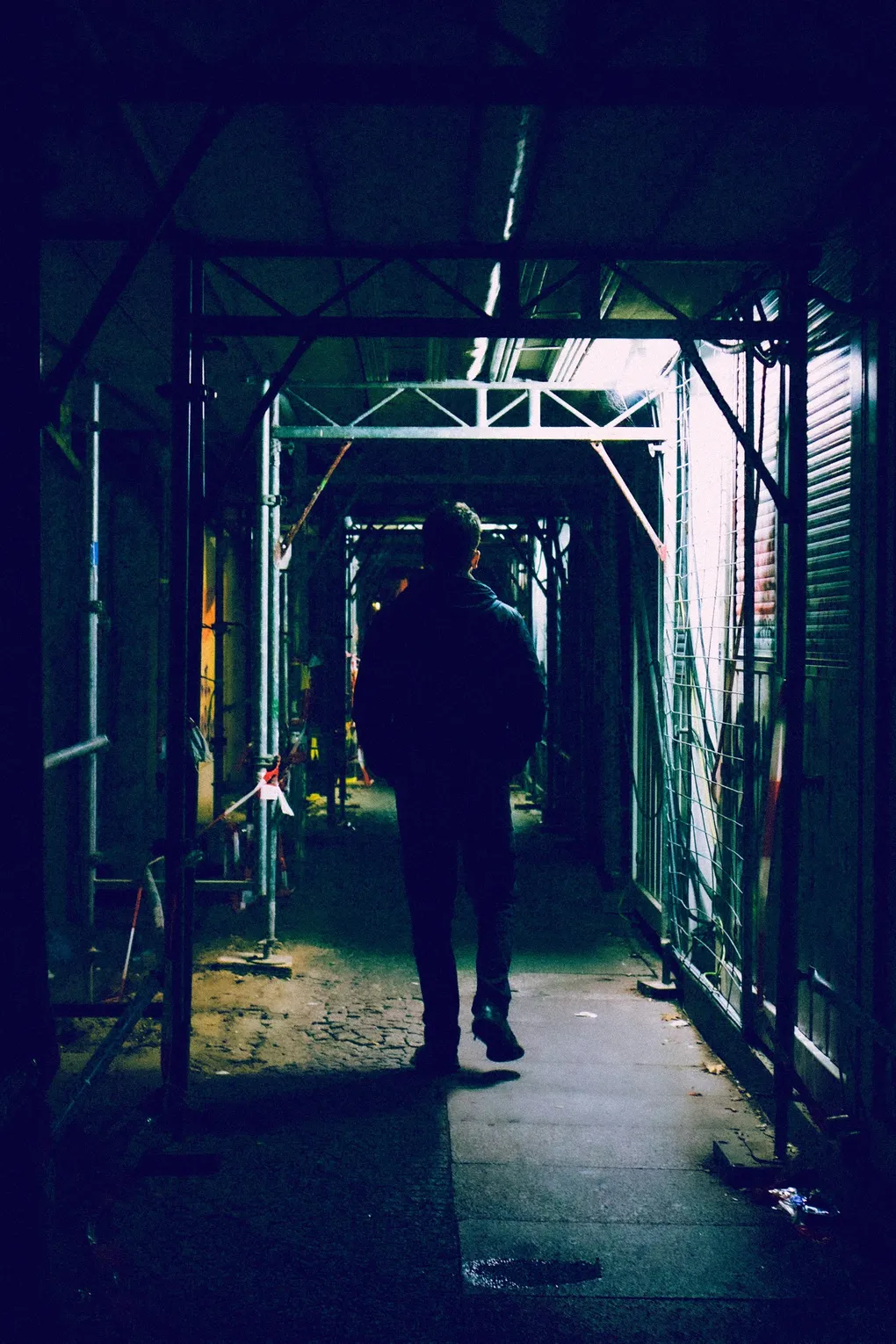
Prepping for Being a Victim of Crime (Part 1): The Hard Target
The burglar who was caught after fifteen years of break-ins told detectives the simplest thing about his career: he never picked the difficult houses. He walked neighborhoods at dusk and crossed off any home with lights, deadbolt sounds, cameras, or a dog. What remained was a list of houses that had made no announcement at all, and those were the ones he worked. Nobody had ever confronted him. Nobody had ever needed to. The houses themselves had done the choosing, years earlier, in the small decisions nobody thinks of as security.
Being the victim of a crime is a sudden, personal SHTF event, but the first line of defense is upstream of the event entirely. Criminals are rarely looking for a challenge, they are looking for an opportunity. They operate on a “Risk vs. Reward” calculation.
Caution: Complacency is a beacon. If you walk with your head down, leave your porch dark, and use “Password123,” you are broadcasting a signal that says: “I am an easy mark.” By becoming a “Hard Target,” you disrupt their risk calculation, forcing them to bypass you and look for an easier option. This is Part 1 of the crime-victim series.
Disclaimer: The information provided in this article is for general informational and educational purposes only. It is not intended as, and should not be considered, legal or security advice.
The Readiness Audit
How easy a mark are you right now?
- Green: You operate in Condition Yellow in public, use two-factor authentication, and have layered home security.
- Yellow: You have locks and passwords, but your habits (phone in hand, boxes on the curb) advertise your patterns.
- Red: You have never done a security audit of your home, routines, or digital life.
If you are Yellow or Red, execute Phase 1 immediately.
Phase 1: Situational Awareness (Your First Line of Defense)
Goal: See threats before they become events.
Situational awareness isn’t paranoia, it’s informed attention to your environment.
The Cooper Color Code System:
- White: unaware and unprepared. Headphones in, phone up, oblivious. This state makes you an easy target.
- Yellow: relaxed alertness. You notice who’s around you and what’s normal for this environment. This should be your default state in public.
- Orange: specific alert. Something seems off, and you are mentally preparing responses.
- Red: ready to act. The threat is imminent, and you’re prepared to respond, whether that’s leaving, calling for help, or defending yourself.
Practical awareness habits: identify exits when entering buildings, scan parking lots before exiting your vehicle, trust your instincts (that uneasy feeling exists for a reason), limit phone use while walking, remove headphones in unfamiliar areas, and walk with purpose, predators select uncertain targets.
The Takeaway: Yellow is a free upgrade to your daily operating system, and the burglar’s own confession says what it buys: the person who notices first is never the one who gets worked.
Phase 2: OPSEC (Operational Security for Civilians)
Goal: Stop broadcasting your patterns.
Originally a military concept, OPSEC is increasingly relevant for everyday civilians.
Physical OPSEC: don’t discuss vacation plans loudly in public, break down expensive-purchase boxes and remove them from curbside quickly, be cautious about what’s visible through windows, don’t leave mail or packages sitting outside, and vary your daily routines when possible.
Social OPSEC: be selective about what you share on social media, disable location tagging on posts, review privacy settings regularly, think twice before posting about being away from home, limit information about your children’s schools and activities, and google yourself periodically to see what’s publicly available.
Financial OPSEC: shred sensitive documents rather than just trashing them, use credit cards with fraud protection rather than debit cards, monitor accounts regularly, consider a credit freeze to prevent identity theft, and use unique, strong passwords for financial accounts.
The Takeaway: Every habit you vary and every box you shred is a data point the risk-calculator never receives.
Phase 3: Home Security (Layers of Protection)
Goal: Build defense in depth.
Effective home security follows the principle of “defense in depth”, multiple layers that slow down or deter criminals at each stage.
The outer perimeter: keep landscaping maintained (overgrown shrubs provide cover), ensure house numbers are visible for emergency responders, install motion-activated exterior lighting, consider thorny plants under first-floor windows, and remove items from the yard that could be used as tools (ladders, large rocks).
Entry points: all exterior doors should have deadbolts with 1-inch throws, use 3-inch screws in strike plates and hinges to prevent kick-ins, sliding doors need secondary locks or security bars, windows should have working locks (consider security film), and peepholes or video doorbells let you see who’s there before opening.
Interior defenses: reinforce the master bedroom door for a safe room option, keep a phone and flashlight accessible, consider a small safe for important documents, and don’t hide keys outside, criminals know all the “secret” spots.
The psychology of deterrence: criminals prefer easy targets. Your goal isn’t to make your home impenetrable, just harder than the next house. Signs of security awareness (alarm signs, cameras visible, well-lit entry points) often deter before any physical measures are tested.
The Takeaway: The 3-inch screw is the cheapest kick-in deterrent that exists, and the goal is not a fortress, it is being more trouble than the next house.
Phase 4: Digital Security (Protecting Your Electronic Life)
Goal: Harden the other perimeter.
Your data is valuable to criminals.
- Password hygiene: use unique passwords for every account, consider a password manager, enable two-factor authentication wherever available, and never share passwords via email or text.
- Device security: keep all devices updated with security patches, use current antivirus software, encrypt sensitive data, use a VPN on public WiFi, and enable “Find My Device” features to locate or wipe lost devices.
- Email and communication security: learn to recognize phishing attempts, verify unexpected requests even from known contacts, don’t click links in unsolicited emails or texts, and be skeptical of urgent requests for money or information.
- Social engineering awareness: criminals often manipulate rather than hack. Verify the identity of callers claiming to be from banks, government, or tech support, and remember that legitimate organizations won’t ask for passwords or PINs.
The Takeaway: Two-factor authentication and a password manager close the two doors most victims never knew were open, and the “urgent request” is the crook’s favorite door of all.
Phase 5: The Security Mindset
Goal: Think like the risk-calculator you are defeating.
- The 10-80-10 rule: 10% of crimes are unpreventable regardless of precautions, 80% can be prevented with reasonable security measures, and 10% would require extraordinary measures. Focus your energy on that middle 80%.
- Cost-benefit analysis: evaluate each measure based on the likelihood of the threat, the potential impact if it occurs, the cost of the preventive measure, and your personal risk tolerance.
- The security audit: periodically walk through your home and life with a criminal’s eye. What would a burglar see from the street? What information is publicly available about you online? What routines could be exploited? Where are the weak points?
The Takeaway: Prevention isn’t about living in fear, it’s about making intelligent choices that reduce risk, and the audit is the habit that keeps the whole system honest.
The Essential Kit Checklist
- The door hardware: deadbolts with 1-inch throws, 3-inch screws in strike plates and hinges.
- The lighting: motion-activated exterior lights, plus visible cameras or alarm signage.
- The digital armor: password manager, two-factor authentication on every account, credit freeze considered.
- The audit: one walk-through with a criminal’s eye, from the street and from your own social profiles.
Scenario Planner (Contingencies)
“I rent and can’t change the doors.” The trap: assuming nothing can be done. The fix: the renter stack, security film on windows, motion lighting, door wedges, thorny planters, OPSEC, and digital hardening. Most of the hard-target protocol requires zero permanent construction.
“My routine is fixed by work and school.” The trap: believing predictability is unavoidable. The fix: vary the small variables, departure times by ten minutes, routes, where you park, and what you carry, because the surveillance a criminal needs is routine, not address.
Next Steps
- Do the criminal’s-eye walk tonight. Street view, front door, back door, your own social profiles. Write down what an easy mark looks like from where you stand.
- Replace the strike-plate screws with 3-inchers this weekend. Ten minutes and the cheapest structural upgrade in home security.
- Read Part 2: Immediate response next, because hard targets still get tested, and the first hour after a crime decides both your safety and your case.
Originally adapted from public DOJ and crime-prevention guidance (public domain).